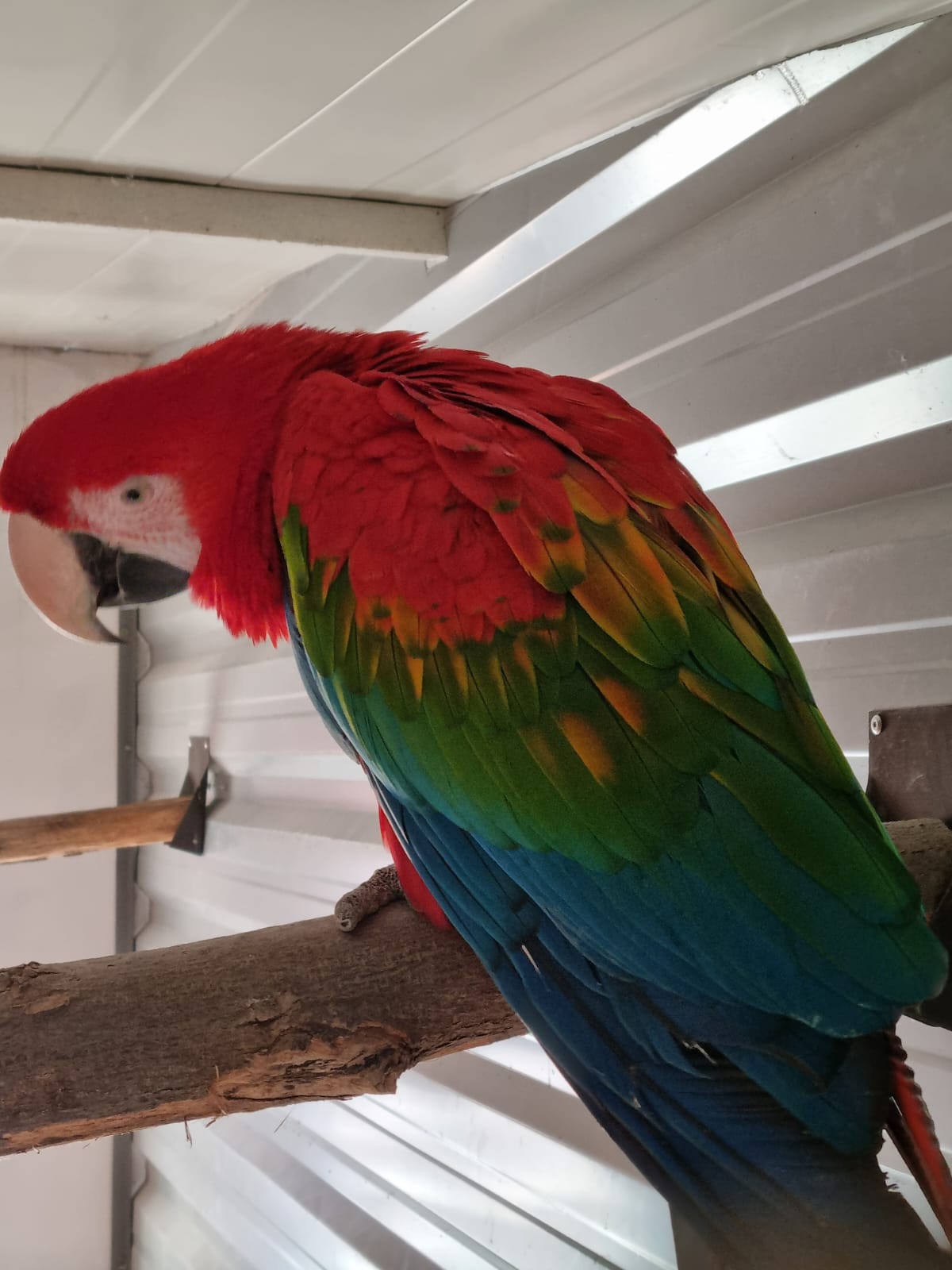
The Blue-and-yellow Macaw is a large macaw native to tropical forests and savannas of South America, particularly along rivers and forest edges. It is highly social and typically seen in pairs or small flocks. The species is adaptable and often tolerates some habitat disturbance. Local declines occur due to habitat loss and capture for trade.
Overview
The Blue-and-yellow Macaw, scientifically known as Ara ararauna, is a large macaw characterized by its bright blue wings and yellow underparts. This species is native to the tropical forests and savannas of South America, particularly thriving along rivers and forest edges. Known for its vibrant colors and strong social bonds, the Blue-and-yellow Macaw typically lives in pairs or small flocks. It is an adaptable species, often tolerating some degree of habitat disturbance. Despite its resilience, it faces threats from habitat loss and capture for the pet trade, leading to localized declines in some areas.
Physical Description
The Blue-and-yellow Macaw is easily recognizable due to its striking coloration. It has predominantly blue feathers on its back, wings, and tail, while its underparts are bright yellow. The macaw's face is adorned with a white patch around the eyes, which can give it an expressive appearance. Adult macaws typically measure between 30 to 36 inches (76 to 91 cm) in length, with a wingspan of about 3 feet (1 meter). Their strong, curved beak is adapted for cracking nuts and seeds, which form a significant part of their diet. The macaw's feet are zygodactyl, meaning it has two toes facing forward and two backward, allowing for a strong grip on branches.
Similar Species
The Blue-and-yellow Macaw is often compared to other macaw species, such as the Scarlet Macaw (Ara macao) and the Green-winged Macaw (Ara chloropterus). While the Scarlet Macaw has red, yellow, and blue plumage, the Green-winged Macaw features a mix of green and red feathers. The Blue-and-yellow Macaw can be distinguished by its unique blue and yellow coloration as well as its slightly larger size. Additionally, it has a different vocalization pattern, often described as a series of loud squawks, which contrasts with the more melodic calls of the Scarlet Macaw.
Range And Habitat
The Blue-and-yellow Macaw is primarily found in the tropical regions of South America, with a range that includes countries such as Brazil, Bolivia, Paraguay, and parts of northern Argentina. This species prefers habitats like tropical rainforests, savannas, and the edges of woodlands near rivers. They are often spotted in areas that provide adequate food sources, such as palm trees, which bear fruits and nuts. While they can adapt to some habitat changes, significant deforestation poses a threat to their populations in various regions.
Behavior
The Blue-and-yellow Macaw is known for its highly social behavior. They often form strong pair bonds and are regularly seen interacting with their mates. Their social structure includes living in small flocks, which enhances their ability to communicate and forage together.
- Vocal Communication: They are capable of a wide range of vocalizations, which they use to communicate with one another.
- Foraging: Their diet primarily consists of fruits, nuts, and seeds, which they forage for in the canopy of trees.
- Playful Nature: They exhibit playful behaviors, often engaging in acrobatics and playful interactions with each other.
- Nesting: Blue-and-yellow Macaws typically nest in tree cavities, where they lay 2-3 eggs, which both parents incubate.
Conservation
The Blue-and-yellow Macaw is currently listed as Least Concern by the IUCN, but it faces several threats that could impact its future. Habitat loss due to deforestation and land conversion for agriculture has resulted in declining populations in some areas. Additionally, illegal trapping for the pet trade has further exacerbated these declines. Conservation efforts are underway to protect their habitats and regulate the trade of these birds. Various organizations are working to restore their natural habitats and raise awareness about the importance of preserving this species in the wild. Captive breeding programs are also being established to help bolster populations.
Parrots Vs. Other Birds
Parrots, including the Blue-and-yellow Macaw, exhibit distinct behaviors and anatomical features that set them apart from other bird groups. Compared to songbirds, parrots are known for their exceptional vocal learning capabilities, allowing them to mimic a variety of sounds, including human speech. This vocal learning is often enhanced by their complex social structures, where communication plays a critical role in their interactions.
In contrast to raptors, which are primarily hunters with sharp talons and beaks specialized for tearing flesh, parrots are foragers with strong, curved beaks adapted for cracking nuts and seeds. For example, the Blue-and-yellow Macaw's beak is particularly robust, enabling it to access hard-shelled fruits that other birds cannot. This difference underscores the varying evolutionary adaptations that meet the feeding needs of these bird groups.
Related pages
For more information on parrots and their characteristics, visit the related pages.