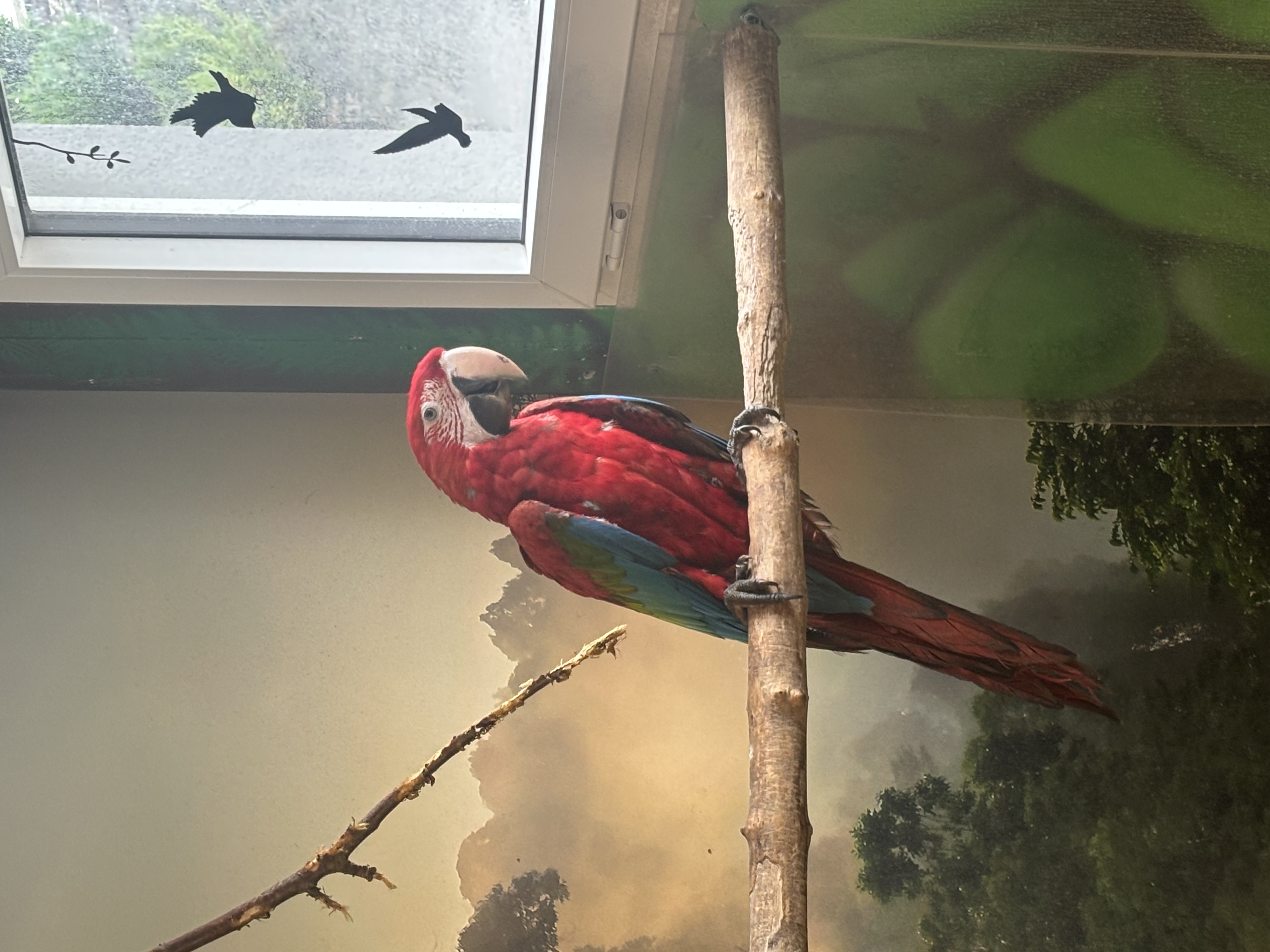
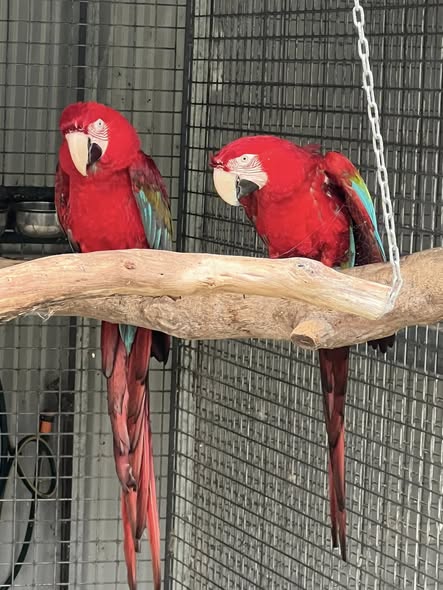
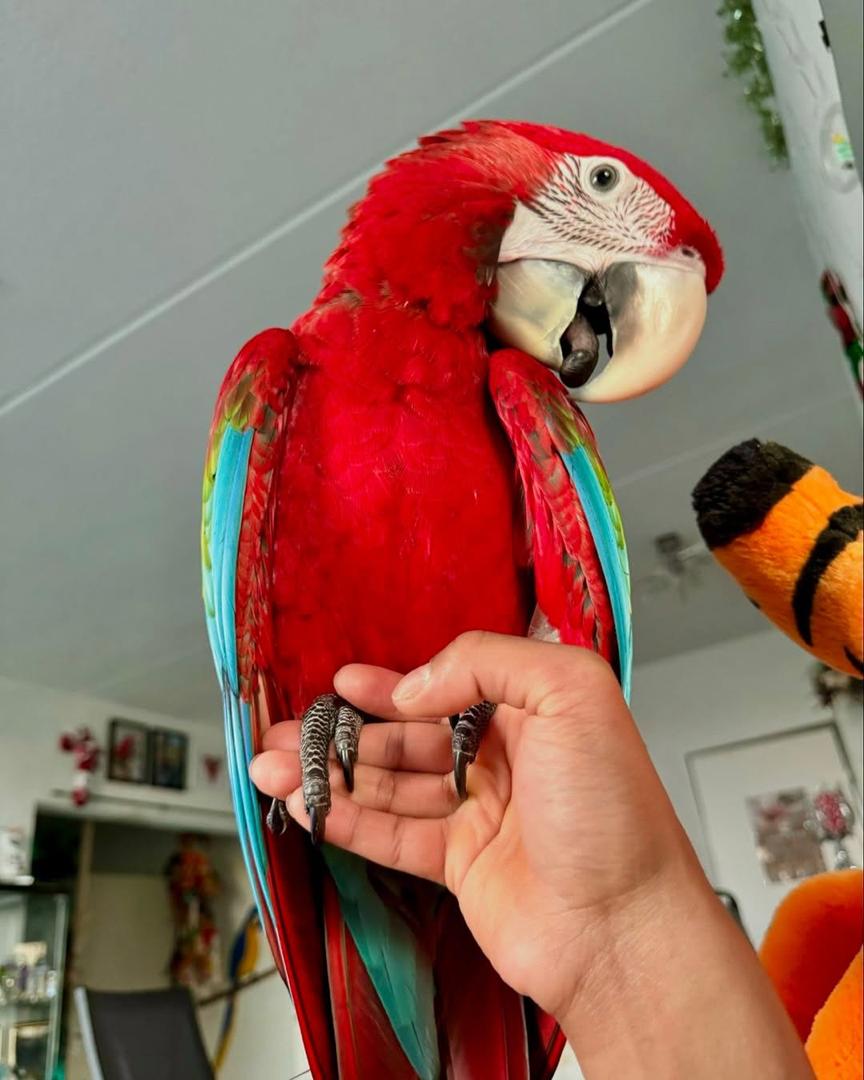
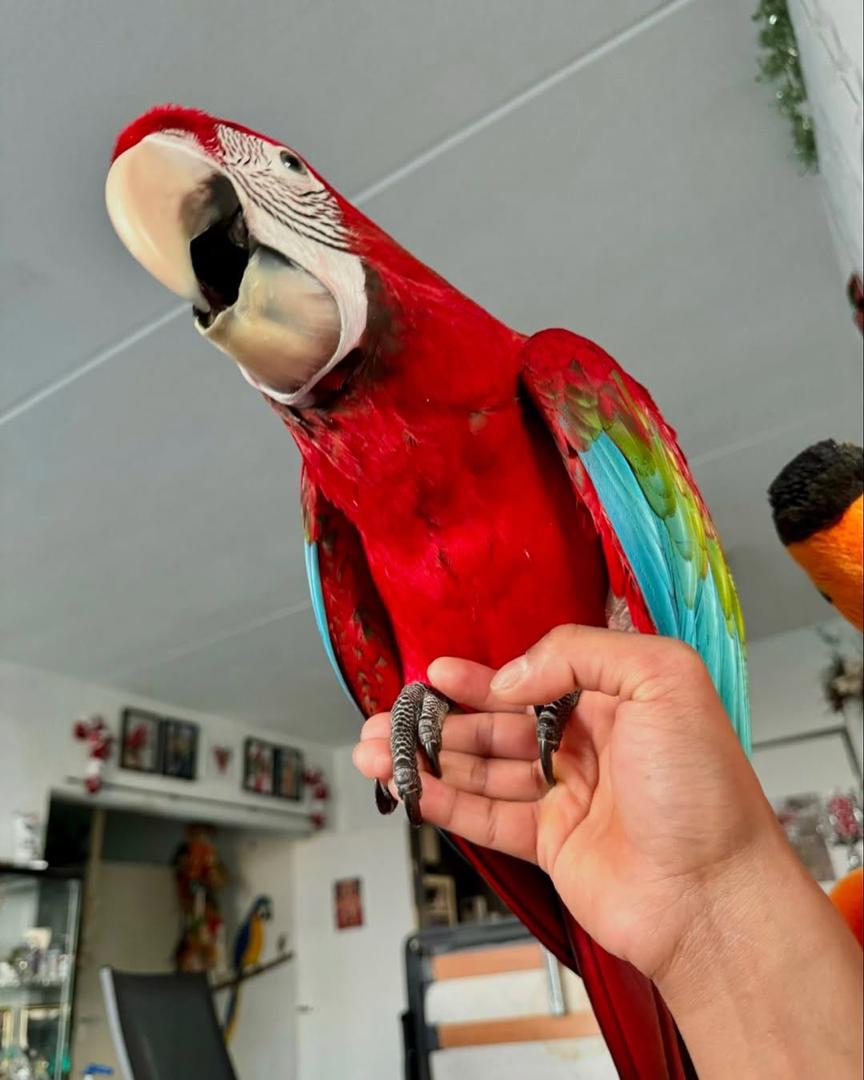
The Red-and-green Macaw occurs across large parts of South America in humid forest and woodland habitats. It is one of the largest flying parrots and is usually observed in pairs or small family groups. The species depends on large trees for nesting. Habitat loss is the primary long-term threat.
Summary
The Red-and-green Macaw (Ara chloropterus) is a large, colorful parrot that inhabits the tropical rainforests of Central and South America. Known for its vibrant plumage and strong beak, this species plays an essential role in its ecosystem, particularly in seed dispersal. The Red-and-green Macaw is often found in pairs or small groups and is recognized for its intelligence and social behavior. As a species that prefers less disturbed habitats, the Red-and-green Macaw faces threats from habitat loss and the illegal pet trade, prompting conservation efforts to protect its populations.
Identification
The Red-and-green Macaw is distinguished by its striking coloration and size:
- Coloration: Predominantly green with a red forehead and a blue and yellow wing patch.
- Size: Measures approximately 81 cm (32 in) in length.
- Beak: Strong, curved, and ivory-colored, adapted for cracking nuts and seeds.
- Eyes: Large with a bright white ring around them.
- Tail: Long and pointed, featuring red and blue feathers.
Range
The Red-and-green Macaw's range extends from southern Mexico through Central America, including countries like Belize, Guatemala, Honduras, and Nicaragua, down to parts of South America, particularly in eastern Colombia, Venezuela, and western Brazil. This species prefers to inhabit areas with abundant tree cover, which provides both food and nesting sites.
Habitat
Red-and-green Macaws thrive in a variety of tropical habitats. They are primarily found in:
- Lowland rainforests: Dense forests with a high canopy where they can find ample food and nesting sites.
- Flooded forests: Areas that experience seasonal flooding, providing diverse food sources.
- Savannas: Open areas with scattered trees, although they prefer regions with less human disturbance. These macaws typically avoid heavily deforested or urbanized areas.
Diet
The diet of the Red-and-green Macaw is primarily herbivorous, consisting of:
- Nuts: Particularly those from palm trees and hardwood species, which they access using their strong beaks.
- Seeds: Various seeds from fruits and plants found in their habitat.
- Fruits: A wide range of fruits, including berries and soft fruits, which are abundant in the forest.
- Flowers: Occasionally, they consume blossoms and nectar. Their diet plays a crucial role in the ecosystem by aiding in seed dispersal.
Behavior
The Red-and-green Macaw exhibits several notable behaviors:
- Social Structure: Typically found in pairs or small family groups, they are highly social birds that engage in vocal communication.
- Vocalizations: Known for their loud calls, which can be heard over long distances, used for communication and establishing territory.
- Nesting: They prefer to nest in tree cavities, often reusing the same site year after year.
- Intelligence: These macaws are highly intelligent, capable of problem-solving and using tools to access food.
Conservation
The Red-and-green Macaw is currently classified as Least Concern by the IUCN, but it faces several threats:
- Habitat Loss: Deforestation and land conversion for agriculture are primary threats, leading to habitat fragmentation.
- Poaching: Illegal trapping for the pet trade impacts local populations.
- Conservation Efforts: Various organizations are working to protect their habitats and enforce laws against poaching. Conservation programs also focus on education and habitat restoration to ensure the survival of this species.
Related pages
Explore more about parrots, their diets, and taxonomy through our related content.