The Great Green Macaw inhabits lowland rainforests of Central America and northwestern South America. It relies heavily on large, old-growth forest trees for both nesting and feeding. The species has a fragmented distribution and low reproductive rates. Extensive deforestation has driven severe population declines.
Overview
The Great Green Macaw, scientifically named Ara ambiguus, is a striking parrot that inhabits various regions in Central and South America. Known for its large size and unique coloration, this species is a member of the family Psittacidae. The Great Green Macaw is particularly noted for its dependence on mature forests, making it vulnerable due to habitat loss.
Physical Description
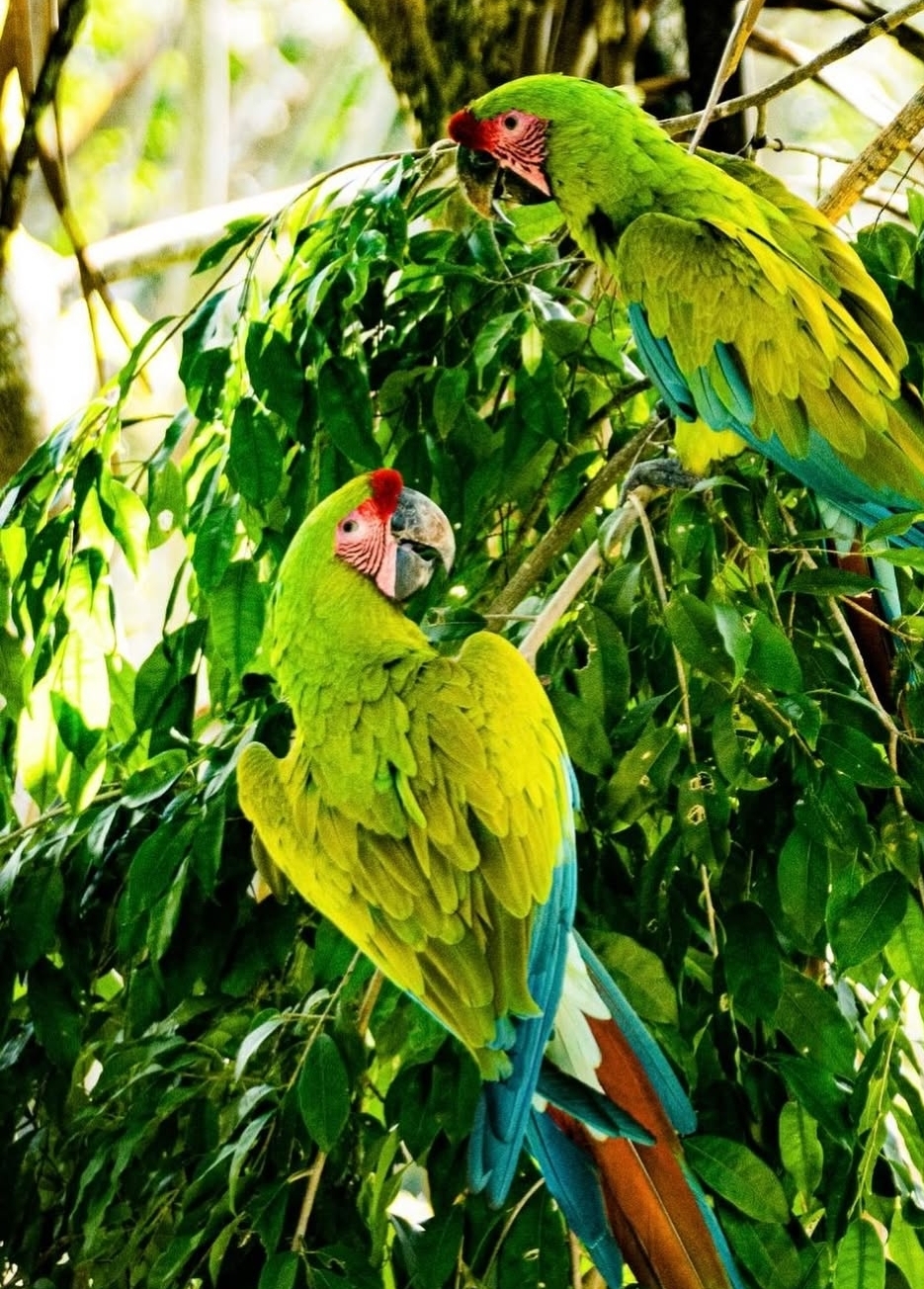
The Great Green Macaw is one of the largest macaw species, with an average length of 80-90 cm (31-35 inches) and a wingspan exceeding 1 meter (3.3 feet). Its plumage is predominantly pale green, with a distinctive red forehead and bright blue flight feathers. The tail is long and pointed, colored in shades of blue and green, while the eyes are surrounded by a bare facial patch that is white in color. The beak is strong and curved, adapted for cracking nuts and seeds.
Similar Species
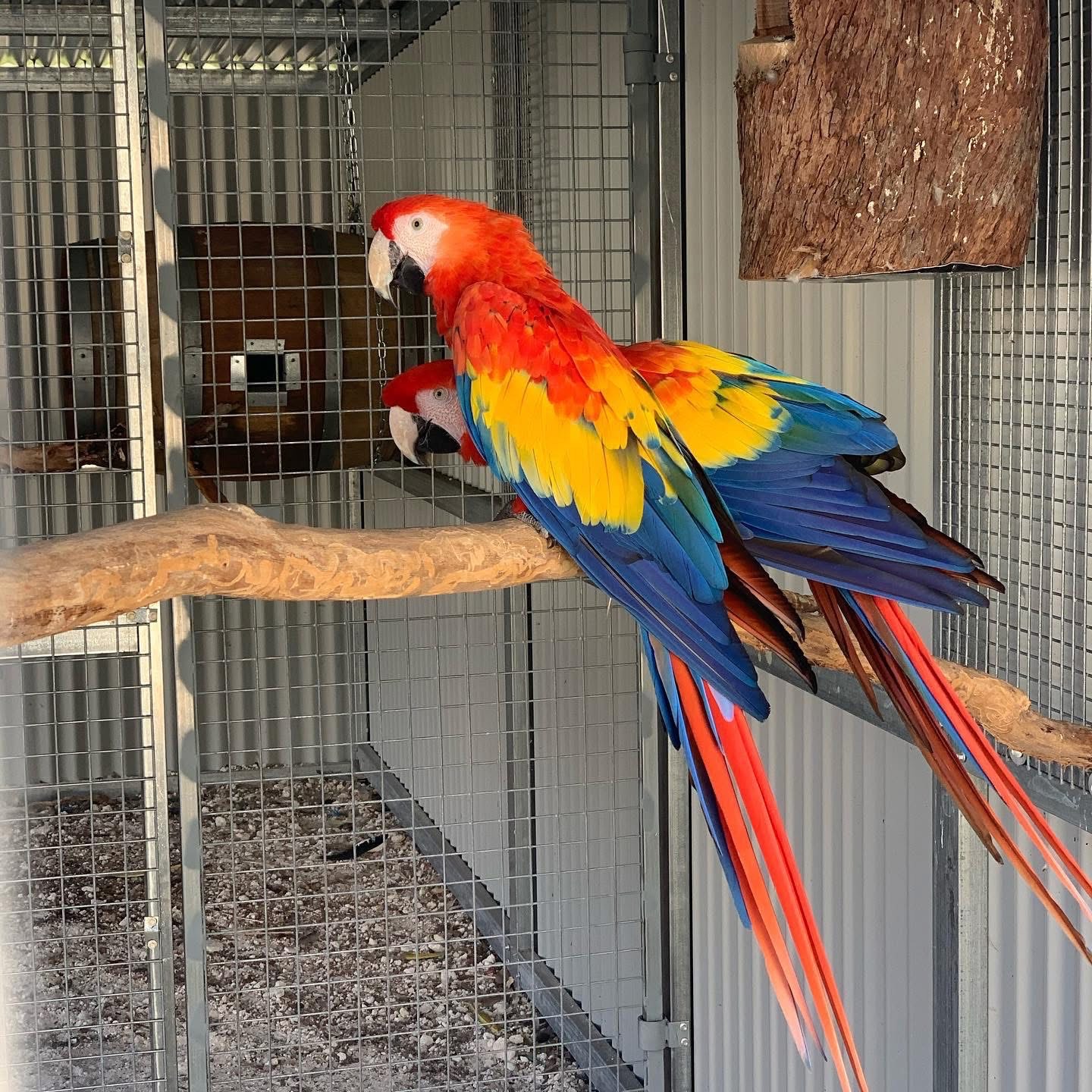
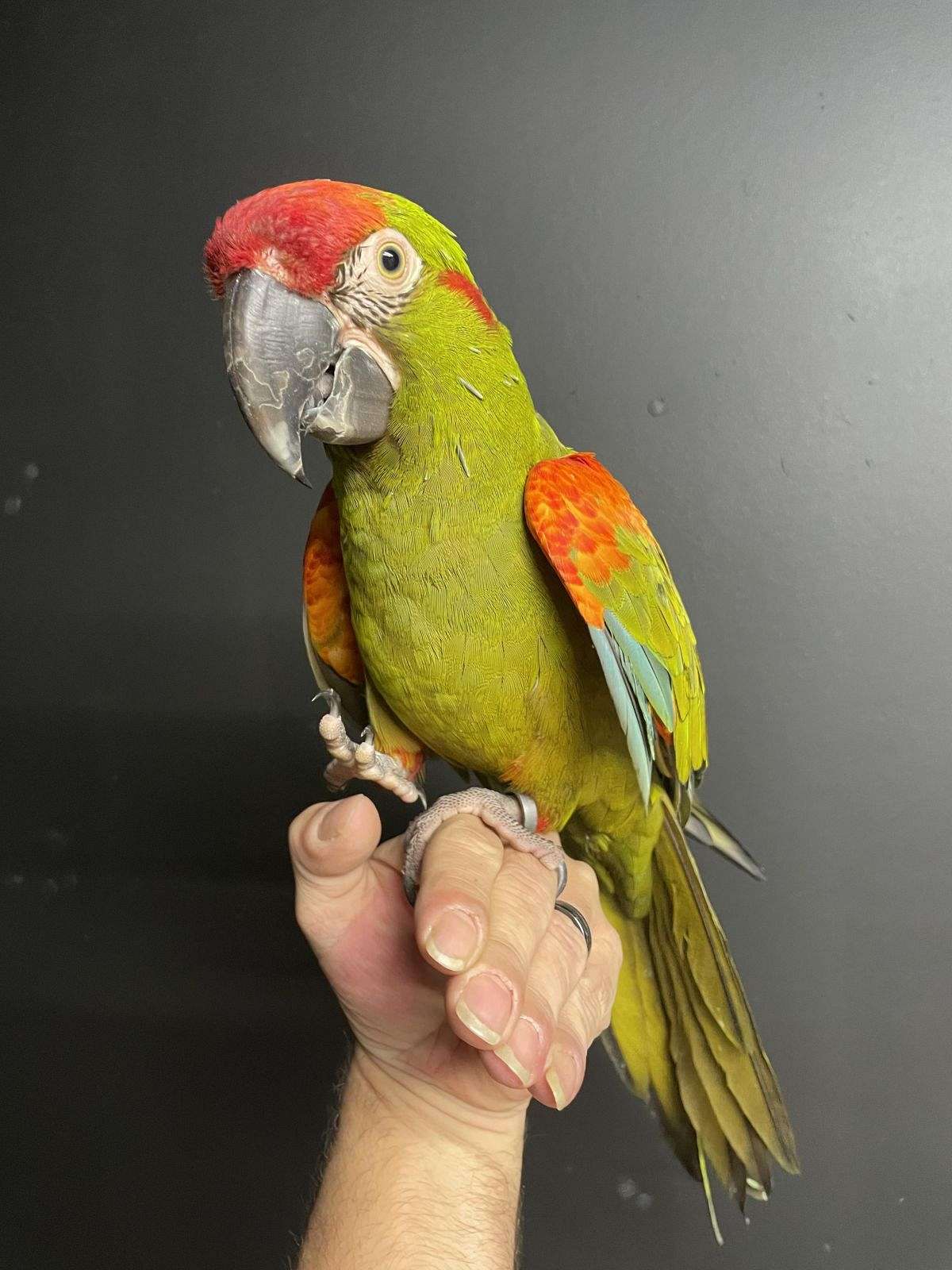
The Great Green Macaw can be easily confused with other large macaws, such as the Blue-and-yellow Macaw (Ara ararauna) and the Scarlet Macaw (Ara macao). However, the Great Green Macaw’s unique color pattern and larger size distinguish it from these species. The Blue-and-yellow Macaw features bright yellow underparts and a more vivid blue on the wings, while the Scarlet Macaw is known for its vibrant red body and blue and yellow wings.
Range And Habitat
The Great Green Macaw is primarily found in the tropical rainforests of Central and South America, with its range extending from Honduras to eastern Ecuador and northern Brazil. This species thrives in lowland and premontane forests, predominantly relying on mature forests that provide essential nesting and foraging sites. The Great Green Macaw's habitat is critically dependent on certain tree species, particularly those of the family Fabaceae, such as the Brazil nut tree, which are vital for their diet.
Behavior
Great Green Macaws are social and often found in pairs or small groups. They are known for their strong bonds and communicate through a variety of vocalizations, including squawks and whistles. Their foraging behavior is primarily diurnal, and they are seen searching for food in the treetops. They exhibit playful behavior, often engaging in acrobatics while hanging from branches. Their nesting typically occurs in tree cavities, where they lay 2-3 eggs, which both parents incubate.
Conservation
The Great Green Macaw is currently classified as Endangered by the IUCN Red List due to habitat loss, deforestation, and poaching for the pet trade. The destruction of mature forests, which are necessary for their survival, has significantly decreased their population. Conservation efforts are underway to protect their remaining habitats and implement breeding programs. Preservation of the Great Green Macaw's natural environment is crucial for the future of the species.
Related pages
See related pages below.