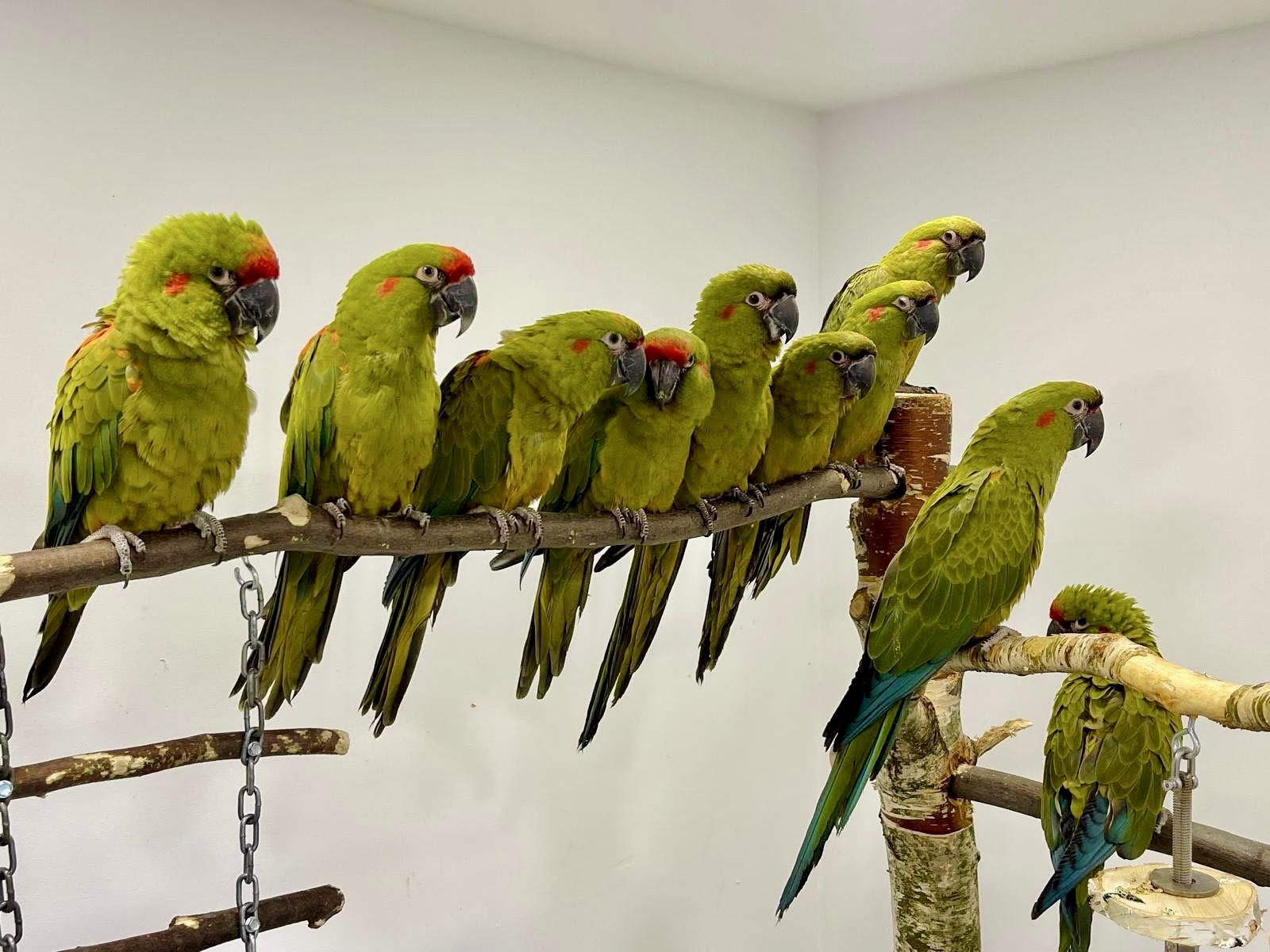
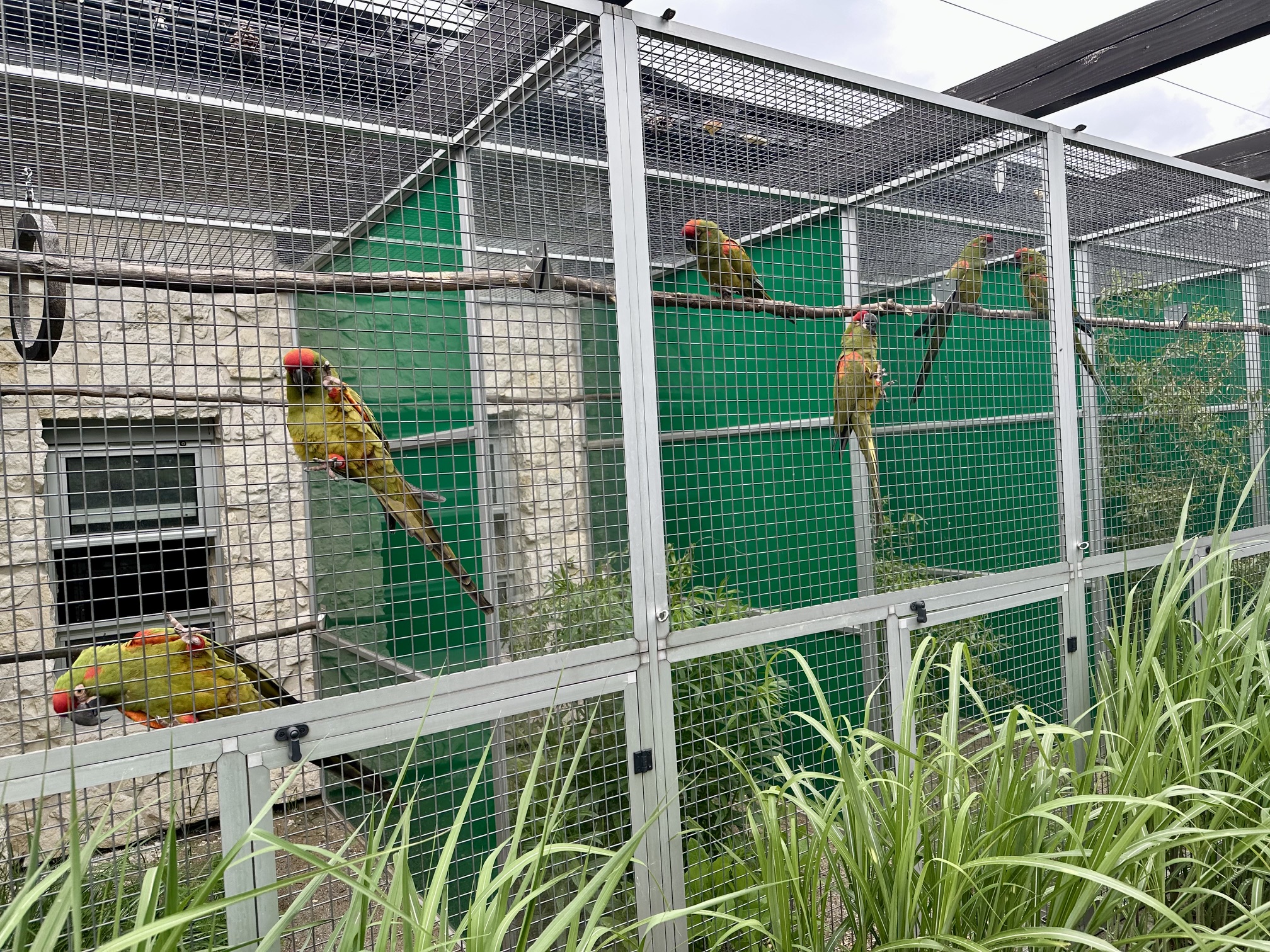
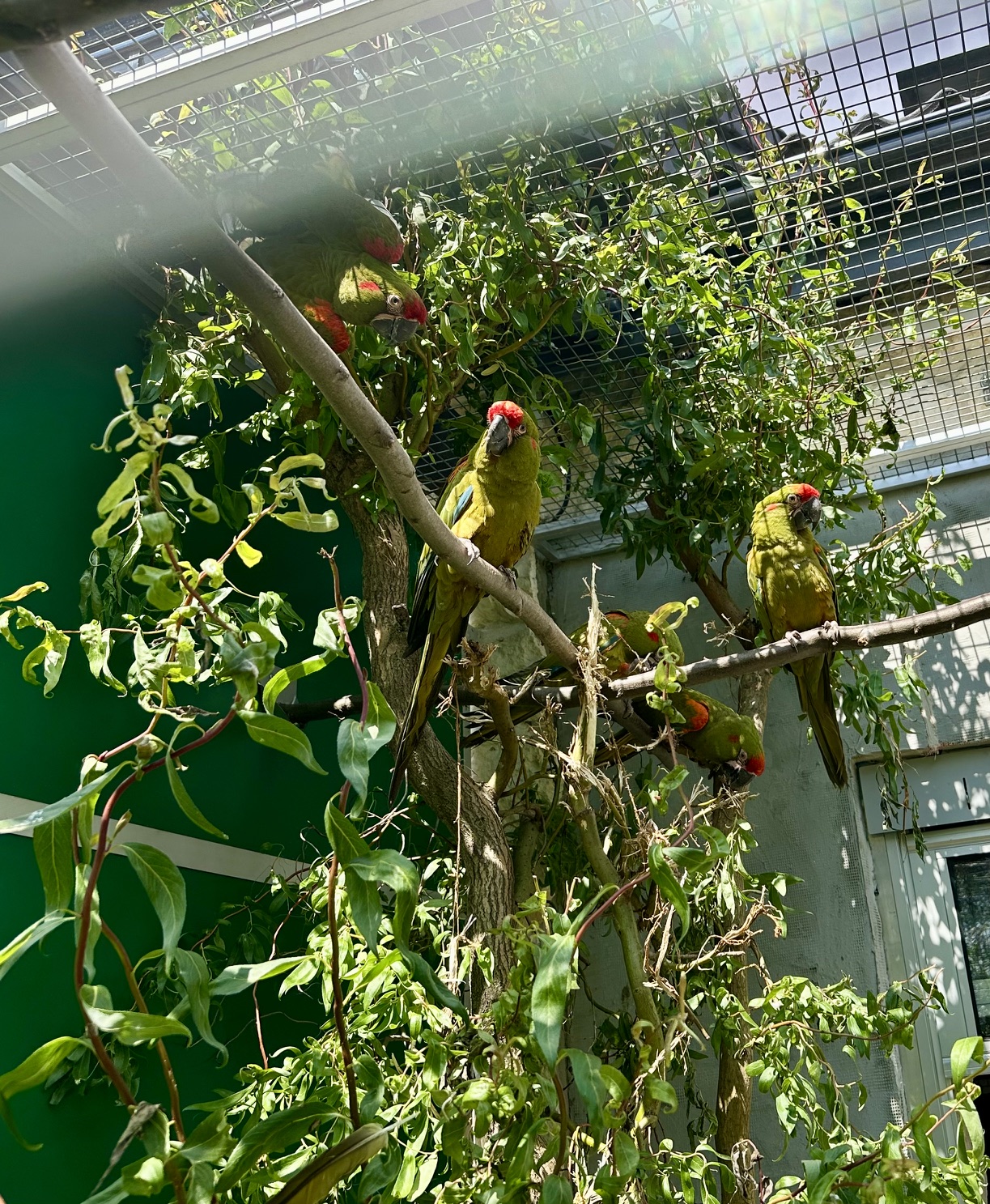
The Blue-throated Macaw is endemic to a small region of savanna and palm-dominated landscapes in northern Bolivia. It has a highly restricted range and specialized habitat requirements. Intensive conservation efforts have stabilized some populations. Historical trapping for the pet trade caused major declines.
Overview
The Blue-throated Macaw (Ara glaucogularis) is a striking species of parrot characterized by its vibrant coloration, particularly the blue throat patch that distinguishes it from other macaws. This species is critically endangered, primarily due to habitat loss and illegal trapping. It is a medium-sized macaw, known for its intelligence and social nature.
Physical Description
The Blue-throated Macaw measures approximately 75 cm (about 30 inches) in length. Its most distinctive feature is the blue throat, which contrasts sharply with its green body. The wings and tail are primarily green with hints of blue and yellow. The face is adorned with a bare facial patch, and the beak is robust and black, suited for cracking nuts and seeds.
Similar Species
The Blue-throated Macaw is often confused with the more common Blue-and-yellow Macaw (Ara ararauna) and the Hyacinth Macaw (Anodorhynchus hyacinthinus). While all these species share some coloration, the Blue-throated Macaw can be identified by its unique blue throat and different body proportions. The Blue-and-yellow Macaw has a more pronounced yellow underbelly, while the Hyacinth Macaw is significantly larger with a more uniform blue coloration.
Range And Habitat
The Blue-throated Macaw is endemic to a small region in Bolivia, specifically in the Beni department, where its population is concentrated around the wetlands and palm savannas. This species prefers habitats that include palm trees, particularly the Mauritia flexuosa, which provides both food and nesting sites. The restricted range and specific habitat requirements greatly contribute to its endangered status.
Behavior
The Blue-throated Macaw is a highly social and intelligent bird, often found in small flocks. They are known for their playful antics and vocalizations. Key behavioral traits include:
- Strong pair bonds, often mating for life.
- Foraging primarily in the early morning and late afternoon.
- Nesting in tree cavities, usually in palm trees.
- Engaging in mutual preening to strengthen social bonds.
Conservation
The Blue-throated Macaw is listed as critically endangered on the IUCN Red List. Major threats include habitat destruction due to agriculture and logging, as well as illegal trapping for the pet trade. Conservation efforts are underway, involving habitat restoration and legal protection, along with breeding programs in captivity. Organizations are working with local communities to raise awareness about the importance of this species and its habitat.
Related pages
For more information about parrot species and diets, explore related pages on parrot taxonomy and dietary habits.